Thursday, August 31, 2006
Email Alert
I have figured out a way to send email updates to people whenever a new post or comment has been added to FoF. Leave your name in the comments section of this post if you would like to get an update.

Wednesday, August 30, 2006
Continued Salvation of OPA?
In the latest wave of good fortune for OPA, we currently have six student employees. If you count Molly who is an off and on OPA employee, then that makes seven. That's pretty good, since it got pretty dire for a while with cut wages and when Holly and I were the only hold outs.
In addition to this, we now have a new AP2
It's kind of a beige color, almost a "Gold Mist Metallic" (see "colors" on the web page)
It's nice to have a new vehicle, but the ground clearance will be an issue. I think we should get it tricked out with a lift and big tires. It needs to lose some of that "fresh from the factory" look.
In addition to this, we now have a new AP2
It's kind of a beige color, almost a "Gold Mist Metallic" (see "colors" on the web page)
It's nice to have a new vehicle, but the ground clearance will be an issue. I think we should get it tricked out with a lift and big tires. It needs to lose some of that "fresh from the factory" look.
El Norta Creeko

Ahhhh yes, waking up knowing that in less than an hour you will be completely covered, nay, saturated, in cow feces. Could you be anywhere else than North Creek Shelter? So I just got back from there last weekend, as did Brad, Holly, Molly, Mike, and Mark; all BYUers. A good time was had by all. We dug a lot, yet still did not hit sterile. At 3 meters below ground surface it eludes us. But from the very bottom we did pull the base of a point (looks like a Pinto), so that was great. What was not so great was that the feature that looked oh so much like a pithouse in profile turned out not to be….probably. Which does not bode well for my dissertation. Instead it looks like it was a heavily used use surface. It was chock full of pits. Which was cool and still salvageable, but all the fill above and probably on parts of the surface and in some of the pits was heavily rodent burrowed so that data coming out of there will be suspect. Not good. I am currently completely ignoring this problem and not thinking about what to do, but eventually (probably this weekend) I will have to evaluate things and decide if I can still do my dissertation on the Early Holocene on the Northern Colorado Plateau using data primarily from North Creek. I wouldn’t be extremely bummed if not for the amount of time and energy I have all ready expended in doing background research and writing grants. I don't have the official photos from the dig yet but will try to post one or two when I get them.
UNLV has me teaching two Cultural Anthropology 101 classes this semester. I have the afternoon and evening classes which means that they are smaller, only around 30 or 40 kids a piece. I didn’t know I was going to be teaching them until two weeks ago, and I was in the field so I couldn’t do any preparation. So this week I have been struggling to get things together. So far so good, no one has dropped anyway. A couple of other things going on but I’ll save them for another post; I’ve got to get back to work. It was good to see all the BYU folks again. Aaron, Chris, Cady, Scott, Mike….we were wishing you could have been there, it would have been a good time to have everyone together. Frescas all around!
Sunday, August 27, 2006
Skeletons in the display case
Hey all,
I got back from the UK last night. It was a fun trip and I spent some time in museums looking at various Roman and Celtic displays.
One thing that impressed me about the various displays was the presence of human remains. There were Roman skeletons and Celtic skeletons on display. It was refreshing to see the various displays and to read about the data gathered due to unfettered access to human remains.
This led me to wonder why there aren't any widespread repatriation movements by Italians or Celtic descendants. In other words, why did we get hit with repatriation issues that have not affected archaeologists in other countries?
I suppose that depth of time is an issue. In some cases, Italians and Brits are more temporally removed from the displayed human remains than Native Americans; but what about Kennewick Man?
So, ultimately, what brought on the revolution that got the NAGPRA ball rolling? Unhealed wounds from colonial attrocities? Native American religious beliefs? Or a combination of the two coupled with a desire to stick it to the white man?
Anyway, I'm sure there is not a definitive answer to any of these questions, and I know that NAGPRA is here to stay, but seeing those skeletons on display made me feel like I was missing out on a piece of archaeology that became unreachable with the implementation of NAGPRA.
I got back from the UK last night. It was a fun trip and I spent some time in museums looking at various Roman and Celtic displays.
One thing that impressed me about the various displays was the presence of human remains. There were Roman skeletons and Celtic skeletons on display. It was refreshing to see the various displays and to read about the data gathered due to unfettered access to human remains.
This led me to wonder why there aren't any widespread repatriation movements by Italians or Celtic descendants. In other words, why did we get hit with repatriation issues that have not affected archaeologists in other countries?
I suppose that depth of time is an issue. In some cases, Italians and Brits are more temporally removed from the displayed human remains than Native Americans; but what about Kennewick Man?
So, ultimately, what brought on the revolution that got the NAGPRA ball rolling? Unhealed wounds from colonial attrocities? Native American religious beliefs? Or a combination of the two coupled with a desire to stick it to the white man?
Anyway, I'm sure there is not a definitive answer to any of these questions, and I know that NAGPRA is here to stay, but seeing those skeletons on display made me feel like I was missing out on a piece of archaeology that became unreachable with the implementation of NAGPRA.
Friday, August 11, 2006
The Experimental Offspring Unite!
The Archaeological Sciences of the Americas 2006 Conference is coming up in September and I thought I would just paste a copy of the powerhouse of BYU "wonderkind" that will be presenting...REPRESENT!
ORGANIZED SESSION: A CORE CONCERN: THE ROLE OF EXPERIMENTAL ARCHAEOLOGY IN TECHNOLOGY STUDIES
ORGANIZERS: A. R. Woods and M. Searcy
1:30 – 2:00 Moving from Guessing to Educated Guessing: Testing the Ethnographic Record with Experimental Archaeology – M. Searcy
2:00 – 2:30 Quantifying Observable Change in the Visual Appearance of Heat Treated Chert – C. Watkins, C. B. Jardine, and S. Ure
2:30 – 3:00 Two Examples of Experimental Archaeology: Methodology, Findings, and Comparisons – D. Yoder
3:00 – 3:30 Constructing a Curriculum: Teaching Ancient Technology and Replication - A. Woods
3:30 – 4:00 Use-Wear or Not Use-Wear: An Experiment to Investigate the Notches in Ribs Recovered From Durango Basketmaker II Contexts – B. Scheiver
4:00 – 4:30 Discussion – J. Clark
P.S. - It looks like we have 30 minutes a piece now. We better start writing!!!
ORGANIZED SESSION: A CORE CONCERN: THE ROLE OF EXPERIMENTAL ARCHAEOLOGY IN TECHNOLOGY STUDIES
ORGANIZERS: A. R. Woods and M. Searcy
1:30 – 2:00 Moving from Guessing to Educated Guessing: Testing the Ethnographic Record with Experimental Archaeology – M. Searcy
2:00 – 2:30 Quantifying Observable Change in the Visual Appearance of Heat Treated Chert – C. Watkins, C. B. Jardine, and S. Ure
2:30 – 3:00 Two Examples of Experimental Archaeology: Methodology, Findings, and Comparisons – D. Yoder
3:00 – 3:30 Constructing a Curriculum: Teaching Ancient Technology and Replication - A. Woods
3:30 – 4:00 Use-Wear or Not Use-Wear: An Experiment to Investigate the Notches in Ribs Recovered From Durango Basketmaker II Contexts – B. Scheiver
4:00 – 4:30 Discussion – J. Clark
P.S. - It looks like we have 30 minutes a piece now. We better start writing!!!
Saturday, August 05, 2006
Gibson may be a drunk, but has a good idea
I just wanted to respond to Aaron's post as well as comments to his post on Apocolypto, since I have a heightened interest in this field.
OK. First, I guarantee that Apocolypto will not be any where close to accurate. We still don't know what accurate is in the Mayan region. Population size, the existence of a proto-Mayan language, and the "collapse" are all areas that are still heavily debated. I am convenced there is no final definition of Mayan culture nor that it will be depicted in the movie. But, this film is building on a known genre, that of "historical drama." In this case, it would be more appropriate to call it "PRE-historical drama," an entirely uncharted style that could aid archaeologists in the ever-dreaded search for funding.
This is where I think we can really make headway in getting the general public involved in archaeology and where Mel Gibson is creating a new type of film that gets us all thinking a little harder about the big picture when it comes to prehistoric cultural groups (i.e., how they all interacted, what it may have looked like, what the language may have sounded like, etc.)
Now, in reference to Gibson's actions, I think he has a problem, and like all Hollywood types, will do the rehab shuffle and be on his way. They are smart to postpone the release of the film. This is likely to our benefit. Unfortunately, the Mayan region already gets lots of funding. What is needed are more films about lesser-known cultures or a television program that highlights these cultures. As the public gets interested in these areas, they will be more likely to support research through volunteered help or funding.
The big question is "how do we make this appeal to the mass public." That is the main challenge, but I am pretty sure it is not simply through public lectures and other traditional community events, although they are very important to continue. Listen to this segment that was on NPR where Leon Lederman confronts a similar issue dealing with public interest in the general field of science. He says that TV is a "medium that would be magical for our society" if it focused on educating the public, but as we all know, this is currently not the case.
Until we can solve that problem, we will be left with the difficulty of scrounging for money from the usual suspects. I vote for the popularizing of archaeology for our benefit and job security. This may sound selfish, but at the same time we will continue in our scientific pursuits of filling in the blanks of prehistory and preserving the past.
OK. First, I guarantee that Apocolypto will not be any where close to accurate. We still don't know what accurate is in the Mayan region. Population size, the existence of a proto-Mayan language, and the "collapse" are all areas that are still heavily debated. I am convenced there is no final definition of Mayan culture nor that it will be depicted in the movie. But, this film is building on a known genre, that of "historical drama." In this case, it would be more appropriate to call it "PRE-historical drama," an entirely uncharted style that could aid archaeologists in the ever-dreaded search for funding.
This is where I think we can really make headway in getting the general public involved in archaeology and where Mel Gibson is creating a new type of film that gets us all thinking a little harder about the big picture when it comes to prehistoric cultural groups (i.e., how they all interacted, what it may have looked like, what the language may have sounded like, etc.)
Now, in reference to Gibson's actions, I think he has a problem, and like all Hollywood types, will do the rehab shuffle and be on his way. They are smart to postpone the release of the film. This is likely to our benefit. Unfortunately, the Mayan region already gets lots of funding. What is needed are more films about lesser-known cultures or a television program that highlights these cultures. As the public gets interested in these areas, they will be more likely to support research through volunteered help or funding.
The big question is "how do we make this appeal to the mass public." That is the main challenge, but I am pretty sure it is not simply through public lectures and other traditional community events, although they are very important to continue. Listen to this segment that was on NPR where Leon Lederman confronts a similar issue dealing with public interest in the general field of science. He says that TV is a "medium that would be magical for our society" if it focused on educating the public, but as we all know, this is currently not the case.
Until we can solve that problem, we will be left with the difficulty of scrounging for money from the usual suspects. I vote for the popularizing of archaeology for our benefit and job security. This may sound selfish, but at the same time we will continue in our scientific pursuits of filling in the blanks of prehistory and preserving the past.
Thursday, August 03, 2006
Note to female GBAC'ers
I know that most of you have friends like unto Mr. Yoder to crash with for GBAC, but by way of update, I just found out that I'm gonna have to stay at the Golden Nugget cuz' I've got two days of agency business meetings before the conference even starts.
Charmaine and I will be grabbing a room for all 5 nights, so if any of you girl-types are looking to go in on a room instead of commuting, let me know. I have the student rate reserved though we're looking into the possibility of getting a government rate that would probably be lower. Either way it's certainly not the least expensive venue they might have chosen! Alas!
Let me know if you want to join us. Stifles evening socializing with OPA-ites to some extent, I suppose, but it guarantees more time watching big names get plastered and makes a's of themselves in the elevator! So, hey. (ummm...lame use of Wikipedia to learn how to make links...nothing so noteable as the Toilet of Croc-Hunting. Sorry.)
Charmaine and I will be grabbing a room for all 5 nights, so if any of you girl-types are looking to go in on a room instead of commuting, let me know. I have the student rate reserved though we're looking into the possibility of getting a government rate that would probably be lower. Either way it's certainly not the least expensive venue they might have chosen! Alas!
Let me know if you want to join us. Stifles evening socializing with OPA-ites to some extent, I suppose, but it guarantees more time watching big names get plastered and makes a's of themselves in the elevator! So, hey. (ummm...lame use of Wikipedia to learn how to make links...nothing so noteable as the Toilet of Croc-Hunting. Sorry.)
Word on the street
Now that Rich and co. have scored a big excavation project by the Provo Airport (Hinckley Mounds, here we come!), Uncle OPA is back on top.
It's a good thing, because I heard that during the lean times he had been sleeping out under the old wheelbarrows between Allen Hall and the Elms.
Anyone else heard anything about our good pal?
It's a good thing, because I heard that during the lean times he had been sleeping out under the old wheelbarrows between Allen Hall and the Elms.
Anyone else heard anything about our good pal?
Archaeology and Movies (useless summer post #3)
With all of the recent news of Mel Gibson and his run-in with the police, it has been suggetsed that his Lamanite thriller Apocolypto will be postponed yet again. Originally, Apocolypto was scheduled to be released sometime this month, but, due to heavy rains in Mexico, it will be released in December. Although, with recent DUI charges, rehab, and anti-semitist remarks, who knows if it will be pushed back even farther?
I was/am still excited to see what Gibson does with the subject matter. I can't remember any good feature films set in Mesoamerica (unless you consider "Ancient America Speaks"). Sadly, I fear that I will be greatly dissapointed. In general, films depicting archaeology have been lacking in accuracy and details.
The Indiana Jones, Tomb Raider, and tragically, Alien vs Predator (shout out to Craig) films all had some sort of "archaeological" theme but fell flat when it came to accuracy.
Now, one could argue that archaeology is in itself, boring. Who wants to film someone filling out site forms or digging a test pit? But there have been some exciting discoveries and events in the archaeological world. The question is, which is better? Making a film about modern archaeologists in adventurous positions or making films ala Apocolypto set in the past, loosely based on the archaeological record?
I would argue that the latter holds more appeal, but the problem is that with so many conflicting theories, one group of theorists will always be upset. Imagine, what if someone did a film on (work with me on this) the Fremont? Who would the writers interview to get the skinny? I can picture a film in which culture takes the sideline, many of the concepts of HBE are thrown in our faces(apologies to Dave), and certain interpretations anger the Natives.
Conversly, a film about a modern archaeologist will almost always take an Indiana Jones/Tomb Raider/Bones slant due to the lack of excitement surrounding excavations and field work.
So, in short, is there a future for archaeological subjects in the cinema? I doubt that anyone will ever get the subject completely right, but what do you all think?
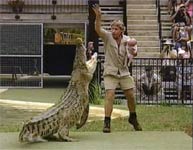
I know that on television, many shows have had some success. Programs appearing on the History Channel and Discovery Channel are, despite melodrama and little inaccuracies, archaeologically friendly. Although, when you get guys like the Josh Bernstein of Digging for the Truth at the helm, I shudder. Ultimately, I think that Chris has the right idea for his tv show, and hey, if Steve Irwin, Crocodile Hunter got a movie, why couldn't Mr. Watkins and his cast and crew of the as yet unnamed archaeology tv show?
I was/am still excited to see what Gibson does with the subject matter. I can't remember any good feature films set in Mesoamerica (unless you consider "Ancient America Speaks"). Sadly, I fear that I will be greatly dissapointed. In general, films depicting archaeology have been lacking in accuracy and details.
The Indiana Jones, Tomb Raider, and tragically, Alien vs Predator (shout out to Craig) films all had some sort of "archaeological" theme but fell flat when it came to accuracy.
Now, one could argue that archaeology is in itself, boring. Who wants to film someone filling out site forms or digging a test pit? But there have been some exciting discoveries and events in the archaeological world. The question is, which is better? Making a film about modern archaeologists in adventurous positions or making films ala Apocolypto set in the past, loosely based on the archaeological record?
I would argue that the latter holds more appeal, but the problem is that with so many conflicting theories, one group of theorists will always be upset. Imagine, what if someone did a film on (work with me on this) the Fremont? Who would the writers interview to get the skinny? I can picture a film in which culture takes the sideline, many of the concepts of HBE are thrown in our faces(apologies to Dave), and certain interpretations anger the Natives.
Conversly, a film about a modern archaeologist will almost always take an Indiana Jones/Tomb Raider/Bones slant due to the lack of excitement surrounding excavations and field work.
So, in short, is there a future for archaeological subjects in the cinema? I doubt that anyone will ever get the subject completely right, but what do you all think?
I know that on television, many shows have had some success. Programs appearing on the History Channel and Discovery Channel are, despite melodrama and little inaccuracies, archaeologically friendly. Although, when you get guys like the Josh Bernstein of Digging for the Truth at the helm, I shudder. Ultimately, I think that Chris has the right idea for his tv show, and hey, if Steve Irwin, Crocodile Hunter got a movie, why couldn't Mr. Watkins and his cast and crew of the as yet unnamed archaeology tv show?


Wednesday, July 26, 2006
Keep Mr. Richens in mind
Just found out a few minutes ago that one of Lane's heart valves (aorta) collapsed this morning. It wasn't considered a heart attack but he has been hospitalized. They put a stent in his heart to clean things up. It sounds like things will be ok, but a few prayers never hurt anything. Apparently he will have a stent in his heart for life and be on medication for a year.
Tuesday, July 25, 2006
As if it hadn't already been rammed down our throats...or, "Damned Hippies digging up my body"
Just got the August issue of National Geographic.
There's an article about Range Creek in there. The link takes you to an excerpt, but I would suggest taking a look at the full article. There are many cool photographs.
The article itself is a fluff piece full of Waldo Wilcox's ramblings and Metcalf's and Barlow's damage control after Waldo rambles.
At one point, Wilcox gives NG his version of the occupation of Range Creek, (Paraphrase)...
Well, I think that a long time ago little people lived around here, they weren't more than two feet tall, then, the Fremont came in here and killed them off.
As for the "Damned Hippies" reference, that's Waldo's opinion of archaeologists digging up graves.
Check it out.
There's an article about Range Creek in there. The link takes you to an excerpt, but I would suggest taking a look at the full article. There are many cool photographs.
The article itself is a fluff piece full of Waldo Wilcox's ramblings and Metcalf's and Barlow's damage control after Waldo rambles.
At one point, Wilcox gives NG his version of the occupation of Range Creek, (Paraphrase)...
Well, I think that a long time ago little people lived around here, they weren't more than two feet tall, then, the Fremont came in here and killed them off.
As for the "Damned Hippies" reference, that's Waldo's opinion of archaeologists digging up graves.
Check it out.
Friday, July 21, 2006
Thursday, July 13, 2006
Mayan Ice Cream (Useless Summer Post #2)
Hi all, saw this and thought you might be interested to enjoy desert like Pacal(or whatever his full name was). Or at least taste how a bunch of euro-americans think mayan chocolate tastes.
Sugar wasn't added to chocolate until it got over to europe right?
If anything, the interactive website is pretty cool.
Sugar wasn't added to chocolate until it got over to europe right?
If anything, the interactive website is pretty cool.
Monday, July 10, 2006
The Holy Trinity of Fresca (useless summer post)
We all know that Fresca flows through the veins of all true OPA fieldworkers, but the question is, which Fresca is best?
As many of you may or may not know, Fresca is now available in three flavors.
Sparkling Citrus (original)
Sparkling Peach Citrus
Sparkling Black Cherry Citrus
I will admit, when these new flavors came out in 2005, I was skeptical. Since then however, I have become quite the fan of peach fresca. It truly is paradise on the tounge. My personal ranking of the Frescas is as follows:
Peach
Original
Black Cherry
Have any of you tried them? I know Holly and I share the same sentiments, but I ask you fellow Fresca lovers, which of the three is your favorite?
DRINK PEACH FRESCA AND LIVE
As many of you may or may not know, Fresca is now available in three flavors.
Sparkling Citrus (original)
Sparkling Peach Citrus
Sparkling Black Cherry Citrus
I will admit, when these new flavors came out in 2005, I was skeptical. Since then however, I have become quite the fan of peach fresca. It truly is paradise on the tounge. My personal ranking of the Frescas is as follows:
Peach
Original
Black Cherry
Have any of you tried them? I know Holly and I share the same sentiments, but I ask you fellow Fresca lovers, which of the three is your favorite?
DRINK PEACH FRESCA AND LIVE
Sunday, July 09, 2006
Jenny's FIR
Hi all!
I'm glad to leave overall summarizing to Aaron's debriefing, but I've now had enough time away from field school to actually sit down and reflect and thought I'd throw it on here for another perspective.
Amen to the refreshing attitude toward decision-making down there! I couldn't believe how often we heard Jim say "It's your dig, what do YOU think?)! And, in the end, I have to give up my private tirades against Arizona...it was a paradise compared to St George, although both camps were comfortable.
My personal highlight was our last three days after several weeks of survey and site recording. My crew spent 3 days on a site we named Hilltop Condos for the number of habitation structures clustered tightly around a small plaza on the point of a hill. Great site! We drove over it with Jim when we went to show him a feature we'd found during survey and it's absolutely gorgeous. The rubble we first recognized in the road turned out to be one of the round structures on site. We eventually identified 3, possibly 4 or 5 total round structures. One is set way apart from the others with very few artifacts. Best guess is it's our kiva, but we didn't have time to test it. Not sure what Hilltop dates to, but ceramics ran the full gamut from PI-ish (I think) to a single poly-chrome piece. We dropped a 1x1 into the plaza where the midden is darkest. Hit our best bet at sterile only 30 cm down, paling in comparison to Aaron and Brad's site, but boy was it artifact rich.
Well, anyway, it's a great site. I think Dave may be the only person on here who saw it, but we were still finding features at that point, so it may not have looked like much. And there's no real comparison to Molly's Imperial 400 or Brad and Aaron's Poverty Ridge East.
The students did really well, I was very impressed. It was an interesting group. Eclectic, to say the least. Jim's kids were an interesting addition. Molly and I shared a tent with Elizabeth and Christopher spent a couple days out on survey with my crew. And, despite my insistence that historics can be fun, it was really great to spend some quality time with real artifacts and such. I really wish I'd known my stuff better--horribly inadequate--but there is still so much to learn about the Anasazi. Our biggest problem, as ever, will be finding good dates for these sites, but hopefully next year they'll get corn.
Well, I'm glad to be back and enjoying a much needed change of company, though I'd stay with the venue down there anyday. It's going to be interesting to see what develops in lab, though I don't envy the students for the amount of washing and labeling they'll have to do on top of their analyses. Molly, Brad, Aaron and I will be co-authoring a paper with Jim for GBAC, mostly summarizing and presenting preliminary data. We'll see how that turns out.
On an aside, if anyone knows people looking for volunteer experience--poor jobless undergrads and such--send them my way. We've got the Uinta National Forest PIT Project out at Vernon 2nd week of August and are pretty short-handed. We'll be focusing on homestead recording, but we've also got some wicked big lithic scatters to chase out. Not the most exciting work, but gorgeous scenery. Vernon's the center of the universe, after all. There are a couple postings about it on the bulletins at the MPC.
Happy field work, everybody! Savor the summer, woe the winter, eh?
I'm glad to leave overall summarizing to Aaron's debriefing, but I've now had enough time away from field school to actually sit down and reflect and thought I'd throw it on here for another perspective.
Amen to the refreshing attitude toward decision-making down there! I couldn't believe how often we heard Jim say "It's your dig, what do YOU think?)! And, in the end, I have to give up my private tirades against Arizona...it was a paradise compared to St George, although both camps were comfortable.
My personal highlight was our last three days after several weeks of survey and site recording. My crew spent 3 days on a site we named Hilltop Condos for the number of habitation structures clustered tightly around a small plaza on the point of a hill. Great site! We drove over it with Jim when we went to show him a feature we'd found during survey and it's absolutely gorgeous. The rubble we first recognized in the road turned out to be one of the round structures on site. We eventually identified 3, possibly 4 or 5 total round structures. One is set way apart from the others with very few artifacts. Best guess is it's our kiva, but we didn't have time to test it. Not sure what Hilltop dates to, but ceramics ran the full gamut from PI-ish (I think) to a single poly-chrome piece. We dropped a 1x1 into the plaza where the midden is darkest. Hit our best bet at sterile only 30 cm down, paling in comparison to Aaron and Brad's site, but boy was it artifact rich.
Well, anyway, it's a great site. I think Dave may be the only person on here who saw it, but we were still finding features at that point, so it may not have looked like much. And there's no real comparison to Molly's Imperial 400 or Brad and Aaron's Poverty Ridge East.
The students did really well, I was very impressed. It was an interesting group. Eclectic, to say the least. Jim's kids were an interesting addition. Molly and I shared a tent with Elizabeth and Christopher spent a couple days out on survey with my crew. And, despite my insistence that historics can be fun, it was really great to spend some quality time with real artifacts and such. I really wish I'd known my stuff better--horribly inadequate--but there is still so much to learn about the Anasazi. Our biggest problem, as ever, will be finding good dates for these sites, but hopefully next year they'll get corn.
Well, I'm glad to be back and enjoying a much needed change of company, though I'd stay with the venue down there anyday. It's going to be interesting to see what develops in lab, though I don't envy the students for the amount of washing and labeling they'll have to do on top of their analyses. Molly, Brad, Aaron and I will be co-authoring a paper with Jim for GBAC, mostly summarizing and presenting preliminary data. We'll see how that turns out.
On an aside, if anyone knows people looking for volunteer experience--poor jobless undergrads and such--send them my way. We've got the Uinta National Forest PIT Project out at Vernon 2nd week of August and are pretty short-handed. We'll be focusing on homestead recording, but we've also got some wicked big lithic scatters to chase out. Not the most exciting work, but gorgeous scenery. Vernon's the center of the universe, after all. There are a couple postings about it on the bulletins at the MPC.
Happy field work, everybody! Savor the summer, woe the winter, eh?
Saturday, June 24, 2006
Aaron's FIR (Fieldschool in Review)
Alright, so I said I'd do this a few nights ago, but never got around to it. So here goes.
After all of the stress of loading up gear and then sitting in the parking lot for hours while Jim tried to get organized, we headed down to St. George. We camped on a wildlife preserve owned by BYU called Lytle Ranch. It was a nice little area with plently of trees and shady spots to camp, showers, and flush toilets. The only draw back was that Lytle Ranch was 45-50 minutes from our sites. So, every morning, we had to drive for quite a while to get to where we were going. Nothing like the convenience of Barnson's land.
Our work in Utah focused on the area of Land Hill, just outside of Ivins, Utah. The sites ranged in size and complexity form small storage features to large room blocks. The whole western face of Land Hill was covered in rock art. Molly and Jenny's crew were in charge of large scale excavations of roomblocks and storage features. My crew was more nomadic, tending to do re-record many of Gardner Daly's pre-recorded sites. In addition to re-recording, we dug test pits at many of these sites. Brad's crew was in charge of recording the rock art. That involved taking lots of photographs and placeing large sheets of Mylar over the panels and tracing over them with sharpies.
Jim's main research interests for Utah were to collect a high sherd yeild, understand the scale and quantitiy of sites on Land Hill, and to use this data to compare the data gathered in the AZ highlands.
I'll speak from personal experience, but our artifact yeild was significant. I got fairly good at choosing tet pit spots afte ther first few were a bust. Turns out, if you dig near or in midden, you get a lot more stuff than if you were to dig in or around a structure. The majority of our artifacts were ceramics. We had plenty of Dogozhi (sp?), Washington Black on White, Redware, corrugated and redwares.
The AZ part of fieldschool proved to be much more interesting (everything's better in AZ right?). We climbed up to an elevation of 6,500 feet. Which made temperatures much more tolerable. We camped at a BLM station in the middle of nowhere. The closest city was St.George, an hour away on a primitive road.
The sites were spectacular and relatively untouched. Brad and I worked on site A:10:24. This site had originally been recorded in 1988, and then later surface collected. As we got on site we were amazed at the high artifact densitiy. Immediately we found complete proj. points, shell beads, unworked olivella shells, lug handles, and painted sherds the size of the palm of your hand. The site was a sea of pin flags. The research strategy for AZ was slightly different. Jim was hesitant to excavate structures and preferred to do test pits and complete collection areas. Even with 10 people working on A:10:24, we still had too much to do. Jim wanted us to point plot all diagnostic and exotic artifacts on the surface (which really slowed us down). Field specimens collected from this site totalted in the 700s (and that was only two weeks of excavation). We also found a single piece of worked turquoise, a strangely worked and shaped scapula (mayan eccentric-esque), and the fragment of a human mandible, molars and pre-molars intact. Jim's strategy for dealing with the human remains was to simply stop digging and rebury it. The Hopi and Paiute agreed to that strategy, so we didn't have to notify anyone, inluding Joel's friends Rick and Rena... (if you don't get that one, I'll explain it)
After working on that site for two weeks my crew was put on survey. We didn't find much. Mostly lithic and ceramic scatters. Other survey crews found several large architectural sites with upright slabs, circular features, and high arifact densities.
All in all, it was a good field school. Jim was flustrered and stress at many times, especially after 9 flat tires, a run-in with a cow and one of our Yukons, and local crazies. It was obvious this was his first year. Joel had it down to a science, but Jim was way more flexible and open to suggestions. It was refereshing though to work with somone who felt that they could walk away from your site with the confidence that you were doing things the right way. That trust was refreshing and empowering. I feel like I could actually run an excavation now.
There is much more, including a visit to UNLVs excavation (sadly, Karen Harry isn't as colorful as Dave Madsen)(no funny stories), and the little funny stories about hitting the cow and other things.
After all of the stress of loading up gear and then sitting in the parking lot for hours while Jim tried to get organized, we headed down to St. George. We camped on a wildlife preserve owned by BYU called Lytle Ranch. It was a nice little area with plently of trees and shady spots to camp, showers, and flush toilets. The only draw back was that Lytle Ranch was 45-50 minutes from our sites. So, every morning, we had to drive for quite a while to get to where we were going. Nothing like the convenience of Barnson's land.
Our work in Utah focused on the area of Land Hill, just outside of Ivins, Utah. The sites ranged in size and complexity form small storage features to large room blocks. The whole western face of Land Hill was covered in rock art. Molly and Jenny's crew were in charge of large scale excavations of roomblocks and storage features. My crew was more nomadic, tending to do re-record many of Gardner Daly's pre-recorded sites. In addition to re-recording, we dug test pits at many of these sites. Brad's crew was in charge of recording the rock art. That involved taking lots of photographs and placeing large sheets of Mylar over the panels and tracing over them with sharpies.
Jim's main research interests for Utah were to collect a high sherd yeild, understand the scale and quantitiy of sites on Land Hill, and to use this data to compare the data gathered in the AZ highlands.
I'll speak from personal experience, but our artifact yeild was significant. I got fairly good at choosing tet pit spots afte ther first few were a bust. Turns out, if you dig near or in midden, you get a lot more stuff than if you were to dig in or around a structure. The majority of our artifacts were ceramics. We had plenty of Dogozhi (sp?), Washington Black on White, Redware, corrugated and redwares.
The AZ part of fieldschool proved to be much more interesting (everything's better in AZ right?). We climbed up to an elevation of 6,500 feet. Which made temperatures much more tolerable. We camped at a BLM station in the middle of nowhere. The closest city was St.George, an hour away on a primitive road.
The sites were spectacular and relatively untouched. Brad and I worked on site A:10:24. This site had originally been recorded in 1988, and then later surface collected. As we got on site we were amazed at the high artifact densitiy. Immediately we found complete proj. points, shell beads, unworked olivella shells, lug handles, and painted sherds the size of the palm of your hand. The site was a sea of pin flags. The research strategy for AZ was slightly different. Jim was hesitant to excavate structures and preferred to do test pits and complete collection areas. Even with 10 people working on A:10:24, we still had too much to do. Jim wanted us to point plot all diagnostic and exotic artifacts on the surface (which really slowed us down). Field specimens collected from this site totalted in the 700s (and that was only two weeks of excavation). We also found a single piece of worked turquoise, a strangely worked and shaped scapula (mayan eccentric-esque), and the fragment of a human mandible, molars and pre-molars intact. Jim's strategy for dealing with the human remains was to simply stop digging and rebury it. The Hopi and Paiute agreed to that strategy, so we didn't have to notify anyone, inluding Joel's friends Rick and Rena... (if you don't get that one, I'll explain it)
After working on that site for two weeks my crew was put on survey. We didn't find much. Mostly lithic and ceramic scatters. Other survey crews found several large architectural sites with upright slabs, circular features, and high arifact densities.
All in all, it was a good field school. Jim was flustrered and stress at many times, especially after 9 flat tires, a run-in with a cow and one of our Yukons, and local crazies. It was obvious this was his first year. Joel had it down to a science, but Jim was way more flexible and open to suggestions. It was refereshing though to work with somone who felt that they could walk away from your site with the confidence that you were doing things the right way. That trust was refreshing and empowering. I feel like I could actually run an excavation now.
There is much more, including a visit to UNLVs excavation (sadly, Karen Harry isn't as colorful as Dave Madsen)(no funny stories), and the little funny stories about hitting the cow and other things.
Thursday, June 22, 2006
Friday, June 16, 2006
Fremont Symposium
Cady and I were talking the other day, and it occurred to me that we should have a one-shot Fremont Symposium at BYU. I'm picturing like less than 30 people.
One day would be papers from each participant on whatever Fremont topic they wanted.
The next day or 2 could be set aside for open discussion of topics. You could submit a topic and a bibliography and people could come in and talk about it openly. Wouldn't it be cool to be able to have a 30 minute round-table discussion on whatever you wanted? Why don't we find Fremont whole vessels? Where are all the burials? What the H is a central structure? The list goes on...
People to attend in addition to the FoF:
Joel
Rich
Lane
Jim A.
Margaret Lyneis
Phil Geib
Shane Baker
Byron Loosle
Charmaine Thompson
Matheney?
Glenna
Kenny Winch
Alan Reed
SHPO/State Archaeologist People
Renee Barlow
Duncan Metcalf
Steve Simms
Dave Madsen
Andrew Ugan
Jason Bright
Interested U of U students
Karen Harry
The new Fremont Indian State Park archaeologist
Any other interested Great Basin Archaeological All-stars (Mel Aikens, the Fowlers, Gardener Dalley, McFadden)
Other Government people
Marti Allen?
The SUU Lady (name escapes me)
Etc...
Special Guest Star: V. Garth Norman
I know Ray tried to do this once with Anasazi pottery and nobody showed up, so we'd have to be a little careful. I'd also like to leave subsistence out of things as much as possible. We don't need to bring up all the old arguments, the point of this would be to press ahead.
One day would be papers from each participant on whatever Fremont topic they wanted.
The next day or 2 could be set aside for open discussion of topics. You could submit a topic and a bibliography and people could come in and talk about it openly. Wouldn't it be cool to be able to have a 30 minute round-table discussion on whatever you wanted? Why don't we find Fremont whole vessels? Where are all the burials? What the H is a central structure? The list goes on...
People to attend in addition to the FoF:
Joel
Rich
Lane
Jim A.
Margaret Lyneis
Phil Geib
Shane Baker
Byron Loosle
Charmaine Thompson
Matheney?
Glenna
Kenny Winch
Alan Reed
SHPO/State Archaeologist People
Renee Barlow
Duncan Metcalf
Steve Simms
Dave Madsen
Andrew Ugan
Jason Bright
Interested U of U students
Karen Harry
The new Fremont Indian State Park archaeologist
Any other interested Great Basin Archaeological All-stars (Mel Aikens, the Fowlers, Gardener Dalley, McFadden)
Other Government people
Marti Allen?
The SUU Lady (name escapes me)
Etc...
Special Guest Star: V. Garth Norman
I know Ray tried to do this once with Anasazi pottery and nobody showed up, so we'd have to be a little careful. I'd also like to leave subsistence out of things as much as possible. We don't need to bring up all the old arguments, the point of this would be to press ahead.
Thursday, June 15, 2006
ASU = BYU South?
The following is an excerpt of an angry email from Dr. Mary Rothschild, a long-term professor of history and former chair of Womens' Studies. She is part of a vocal cadre of faculty who are extremely opposed to the policies of ASU's President, Michael Crow.
"And I know I shouldn't say this, but many of us hate that we are becoming BYU South. The Fulton fundraising does not come without strings. You should see the flyer that is in the box outside the fence where the new enormous LDS Institute is being built. It is an article from the Church News that has quotes from the president saying that ASU is particularly glad to have Mormons because they raise the retention rates and are such good students, etc. Honestly, and we are put on public notice in the Wall Street Journal for not hiring a professor of religious studies because the local church objects. It takes me back to my first graduation here when Homer Durham returned to be the public speaker and he began with a prayer and I walked out. I think there should be a WALL between religious groups and public universities. Campus ministries are fine, but they exist for students and should be nothing more than extracurricular activities."
I guess I know now why I got into ASU huh!?
Note: Homer Durham is my great-uncle.
"And I know I shouldn't say this, but many of us hate that we are becoming BYU South. The Fulton fundraising does not come without strings. You should see the flyer that is in the box outside the fence where the new enormous LDS Institute is being built. It is an article from the Church News that has quotes from the president saying that ASU is particularly glad to have Mormons because they raise the retention rates and are such good students, etc. Honestly, and we are put on public notice in the Wall Street Journal for not hiring a professor of religious studies because the local church objects. It takes me back to my first graduation here when Homer Durham returned to be the public speaker and he began with a prayer and I walked out. I think there should be a WALL between religious groups and public universities. Campus ministries are fine, but they exist for students and should be nothing more than extracurricular activities."
I guess I know now why I got into ASU huh!?
Note: Homer Durham is my great-uncle.
Tuesday, June 06, 2006
Doug McFadden Update
This morning I was perusing the Arizona State Museum list of permit holders, and noticed that McFadden had started his own contract company out of Kanab.
http://www.statemuseum.arizona.edu/profsvcs/permits/permittees.shtml
Note also that Sean's company out of Layton, UT is also on this list.
http://www.statemuseum.arizona.edu/profsvcs/permits/permittees.shtml
Note also that Sean's company out of Layton, UT is also on this list.
Subscribe to:
Posts (Atom)